
University Hospital Leipzig partnered with Apple to hold its first workshop on spatial computing for neurosurgeons in November 2024. The course offered insights into and hands-on practice with this latest technology.
1. November 2026 • News
1. November 2026 • News
Leipzig offers a robust innovation ecosystem for the hospital of tomorrow
The hospital of tomorrow is going to be interconnected, data-driven, and more closely tailored to patients’ individual needs. The challenge this poses is that along the entire continuum of care – from the initial diagnosis to hospital discharge – many components and systems will need to be seamlessly integrated. Experts with a wide range of skills and experience will be needed to address these issues. In Leipzig, innovative start-ups, com-panies, and institutions are already working on new solutions for the future of healthcare.
“Innovation in hospitals rarely fails because of a lack of great ideas, but because it’s difficult to translate those ideas into everyday practice,” says Christoph Möllering, Managing Director of the MITCenter at Leipzig University Hospital. “This is exactly the kind of work we do here at the MITCenter.” The center sees itself as a neutral hub at the nexus of clinical practice, industry, and academia. An interdisciplinary team is dedicated to supporting healthcare innovation along the entire translation process – from the initial needs analysis, through regulatory classification, to pilot testing in a clinical setting.
Thanks to its strong links with clinical partners, the MITCenter can develop and test inno-vations not just theoretically, but in real-world clinical settings. Starting in 2027, doctors, nurses, industry partners, and start-ups will be able to experience this approach firsthand. At the Leipzig Health Innovation Forum, they’ll be able to walk through an actual doctor’s office as well as a patient and nursing care room, where they can test and rate many new techno-logies themselves. Leipzig will thus be one of the first to offer a tactile experience of the future of healthcare.
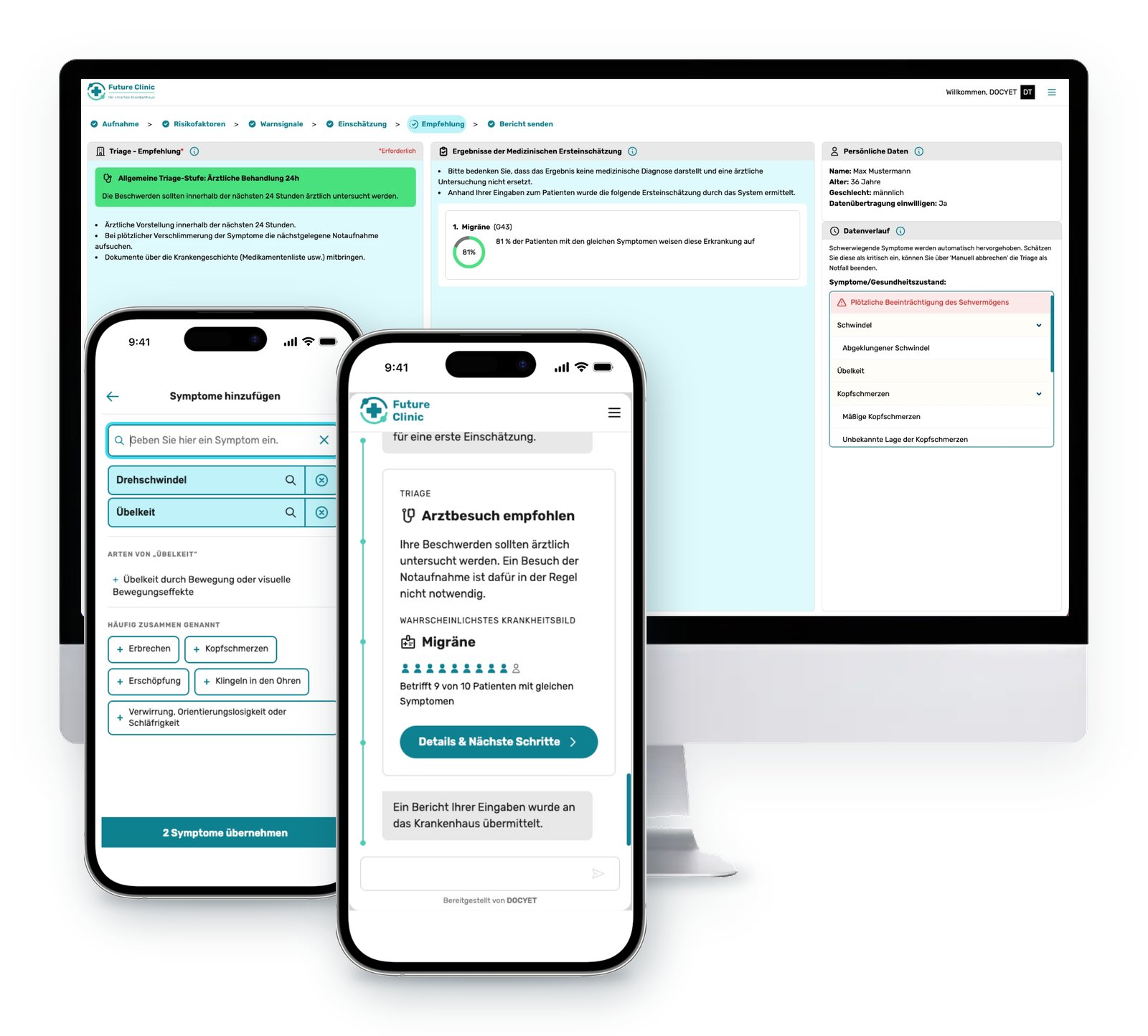
Leipzig’s innovation-friendly environment is also evident in the successful digital health companies which are based here. DOCYET GmbH has developed a navigation software program which is already being used at a hospital in the German city of Fulda, for example. “Our preclinical initial assessment determines a patient’s medical need and guides them to the clinical facility where they can best get that need met,” explains Managing Director Florian Bontrup. In addition to the emergency room, this can also be an on-call medical service or a primary care physician’s office, which can help reduce the pressure on hospitals.
The Leipzig-based start-up RedZinc has developed the telemedicine platform “BlueEye”, which digitally connects healthcare professionals with patients outside the hospital. It allows physicians to e.g. monitor a patient’s vital signs and conduct video consultations, as well as enabling patients to fill out medical questionnaires. Vulnerable patient cohorts can thus receive personalized care at home instead of in the hospital, leading to a more effective use of healthcare resources.
Digital medicine doesn’t just need to be smart and connected, it also needs to be robust and reliable. And the hospital of tomorrow needs secure structures, models, and methods to turn data into clinically actionable information. This is where Leipzig’s Innovation Center for Computer-Assisted Surgery (ICCAS) comes into play. It offers an interconnected R&D and testing environment where healthcare innovations can be analyzed at an early stage with regard to their interoperability, data integration, user interaction, and clinical processes.
In addition to numerous research projects, the experts at ICCAS have been working for years on integrated solutions for the hospital of tomorrow. These include, among other things, the smart operating room, robotic assistance systems, connected emergency care, digital patient rooms and models, AI-assisted monitoring and image analysis, as well as interlinked commu-nication and data infrastructures. Start-ups and mature companies can draw on this expertise to find answers to questions such as: How does my innovation fit into the healthcare landscape? How can it be optimized? Is the technology viable and marketable?
On the path to the digitally connected hospital of tomorrow, companies in Leipzig will find an integrated ecosystem for developing, evaluating, and implementing their ideas. Healthcare innovations can thus reach clinical practice faster – and the people who depend on them.

University Hospital Leipzig partnered with Apple to hold its first workshop on spatial computing for neurosurgeons in November 2024. The course offered insights into and hands-on practice with this latest technology.

cell-immune-gene-therapies
Small glas bottle which is normally used to store vaccine
Chimeric Antigen Receptor T Cell Therapy (CAR-T): Genetically programmed immune cell binds to and destroys cancer cell / Therapy is now available for the majority of indications
digital-health
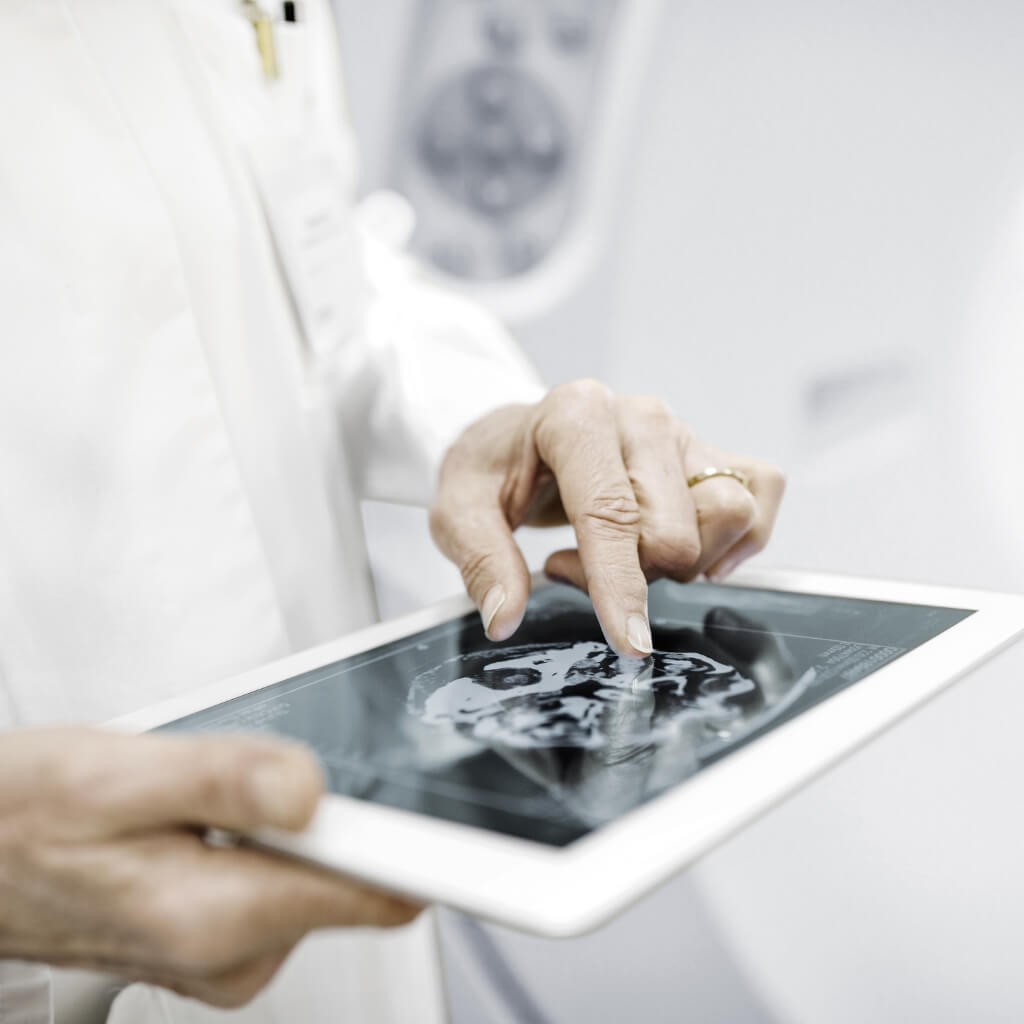
Human who looks onto a recording of brainwaves on his tablet computer and moves the model with his fingers
The Smart Infrastructure Hub Leipzig will receive a further 1,9 million euros from the cluster funding of the Saxon Ministry of Economic Affairs.
cell-immune-gene-therapies
Small glas bottle which is normally used to store vaccine
A relatively small metropolis in Germany’s Free State of Saxony – a dynamic hub for the life science industry? What was just a vision 20 years ago has become a reality for the city of Leipzig, which from October 24-26 co-hosted BIO-Europe, Europe’s largest annual biotech partnering event.