University Hospital Leipzig partnered with Apple to hold its first workshop on spatial computing for neurosurgeons in November 2024. The course offered insights into and hands-on practice with this latest technology.
1. June 2026 • News

1. June 2026 • News
Germany is a pioneer when it comes to digital health applications (DiGAs). From 2026 onwards, it’s stepping up its regulatory requirements with regard to evidence, data protection, and integration. As a result, young companies in particular will be facing new challenges when entering the market. In Leipzig, start-ups benefit from a unique ecosystem which offers them structured support – because the Saxon life science cluster seamlessly integrates acceleration, regulatory expertise, proximity to clinical settings, and public funding.
With an alumni survival rate of approximately 89%, SpinLab ranks among Europe’s top accelerators. The Leipzig-based accelerator has supported 226 young companies to date; on average, participating start-ups raise €2.9 million in external investment capital each. One such alumnus is the digital health company mementor. It developed ’somnio’, one of Germany’s most successful DiGAs.
somnio treats insomnia using cognitive behavioral therapy. The first permanently listed DiGA in the sleep sector was sold to the global medtech company ResMed after three years. Another SpinLab graduate is the evidence-based DiGA ‘eCovery’ for the treatment of back pain. The BfArM-listed app combines personalized training with digital coaching and is eligible for reimbursement within the German healthcare system as a ‘prescription app’.
“Digital health solutions need more than just a good idea. Evidence, regulatory clarity, and clinical interoperability are crucial,” says Simone Haubner, COO of medical:forge Leipzig, an initiative of leap:up GmbH. “This is precisely where we can help – by actively guiding start-ups through processes like MDR certification and gaining market access.” medical:forge also provides support with, among other things, clinical validation, preparation for DiGA procedures, and CE certification.
The 12-month program helps start-ups access relevant healthcare partners, infrastructure, and mentoring. With the support of medical:forge, several healthcare solutions have already successfully launched. This includes the certified medical device ‘diafyt’ which uses AI to help people with type-1-diabetes manage their insulin dosing.
SpinLab graduate ‘JawBuddy’ is currently getting ready to submit its innovation – an AR-based treatment for bruxism and jaw problems – for MDR and ZPP certification. JawBuddy co-founder and CEO Leon Rauch says: “As a start-up, we chose Leipzig because it combines a ‘can do’ attitude with medical expertise and a strong network of partners within a tight-knit community.”
Companies receive up to €100,000 in municipal funding, their founding and growth is actively supported, and the life sciences cluster is given global visibility through the ‘Leipzig for LifeChangers’ campaign. Local policymakers know from experience that digital health solutions succeed when innovation, regulation, and healthcare delivery seamlessly integrate. Innovators like Rauch concur : “In Leipzig, we engage with stakeholders in the ecosystem as equals – not as an insignificant start-up, but as a respected partner.”

University Hospital Leipzig partnered with Apple to hold its first workshop on spatial computing for neurosurgeons in November 2024. The course offered insights into and hands-on practice with this latest technology.

cell-immune-gene-therapies
Small glas bottle which is normally used to store vaccine
Chimeric Antigen Receptor T Cell Therapy (CAR-T): Genetically programmed immune cell binds to and destroys cancer cell / Therapy is now available for the majority of indications
digital-health
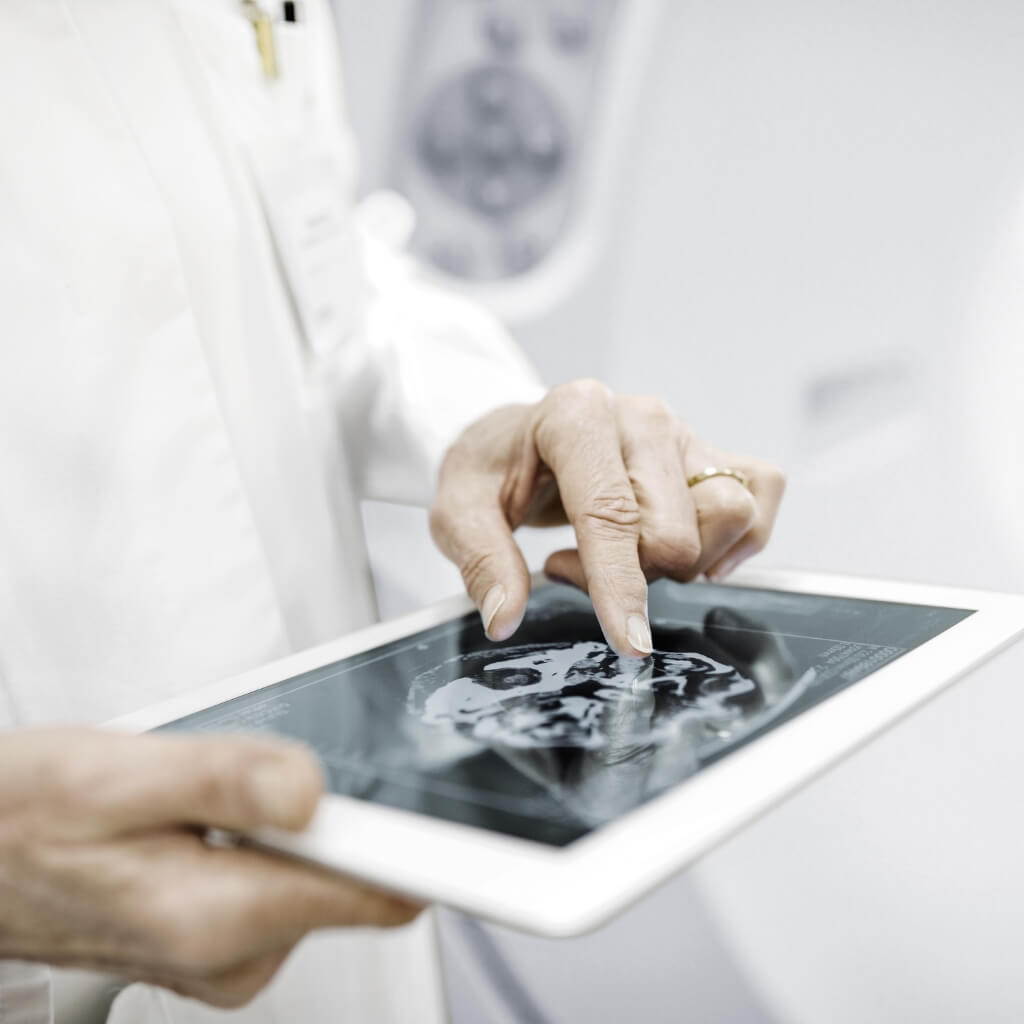
Human who looks onto a recording of brainwaves on his tablet computer and moves the model with his fingers
The Smart Infrastructure Hub Leipzig will receive a further 1,9 million euros from the cluster funding of the Saxon Ministry of Economic Affairs.
cell-immune-gene-therapies
Small glas bottle which is normally used to store vaccine
A relatively small metropolis in Germany’s Free State of Saxony – a dynamic hub for the life science industry? What was just a vision 20 years ago has become a reality for the city of Leipzig, which from October 24-26 co-hosted BIO-Europe, Europe’s largest annual biotech partnering event.