
University Hospital Leipzig partnered with Apple to hold its first workshop on spatial computing for neurosurgeons in November 2024. The course offered insights into and hands-on practice with this latest technology.
27. November 2025 • News
27. November 2025 • News
Deep tech can help solve difficult life science problems in innovative ways. Trailblazers in Leipzig are using it to advance the fields of smart surgery and quantum computing.
The Department of Neurosurgery at Leipzig University Hospital and the Fraunhofer IWU have teamed up to advance the development of data glasses for surgical applications. In November 2025 they celebrated the launch of their new platform “predict”, a network for spatial computing in surgery, with a seminar at Leipzig’s Museum of Fine Arts. Experts covered topics ranging from pediatric oncological surgery, to patient safety, to the innovations driving the future of spatial computing.
Data glasses are ‘smart’ glasses or headsets that enable surgeons to see both the patient and digital information at the same time. Data can include 3D images of the patient’s anatomy, the position of surgical tools, vital signs, scans, or checklists. Because the glasses are controlled by voice, gestures, or foot pedals, surgeons get hands-free access to all the necessary data right in front of their eyes.
Meanwhile, Leipzig start-up SaxonQ has just secured seven-figure funding from Saxony’s Technology Start-up Fund TGFS. The company is developing mobile quantum computers based on diamond chips that operate at room temperature, enabling their use outside of specialized laboratories. Their goal is to develop the first quantum computer in a chip format, and enable industrial usage in the fields of medicine, energy, logistics, and AI. The first systems are already running successfully, including at the Fraunhofer IWU and at the German Aerospace Center (DLR).

University Hospital Leipzig partnered with Apple to hold its first workshop on spatial computing for neurosurgeons in November 2024. The course offered insights into and hands-on practice with this latest technology.

cell-immune-gene-therapies
Small glas bottle which is normally used to store vaccine
Chimeric Antigen Receptor T Cell Therapy (CAR-T): Genetically programmed immune cell binds to and destroys cancer cell / Therapy is now available for the majority of indications
digital-health
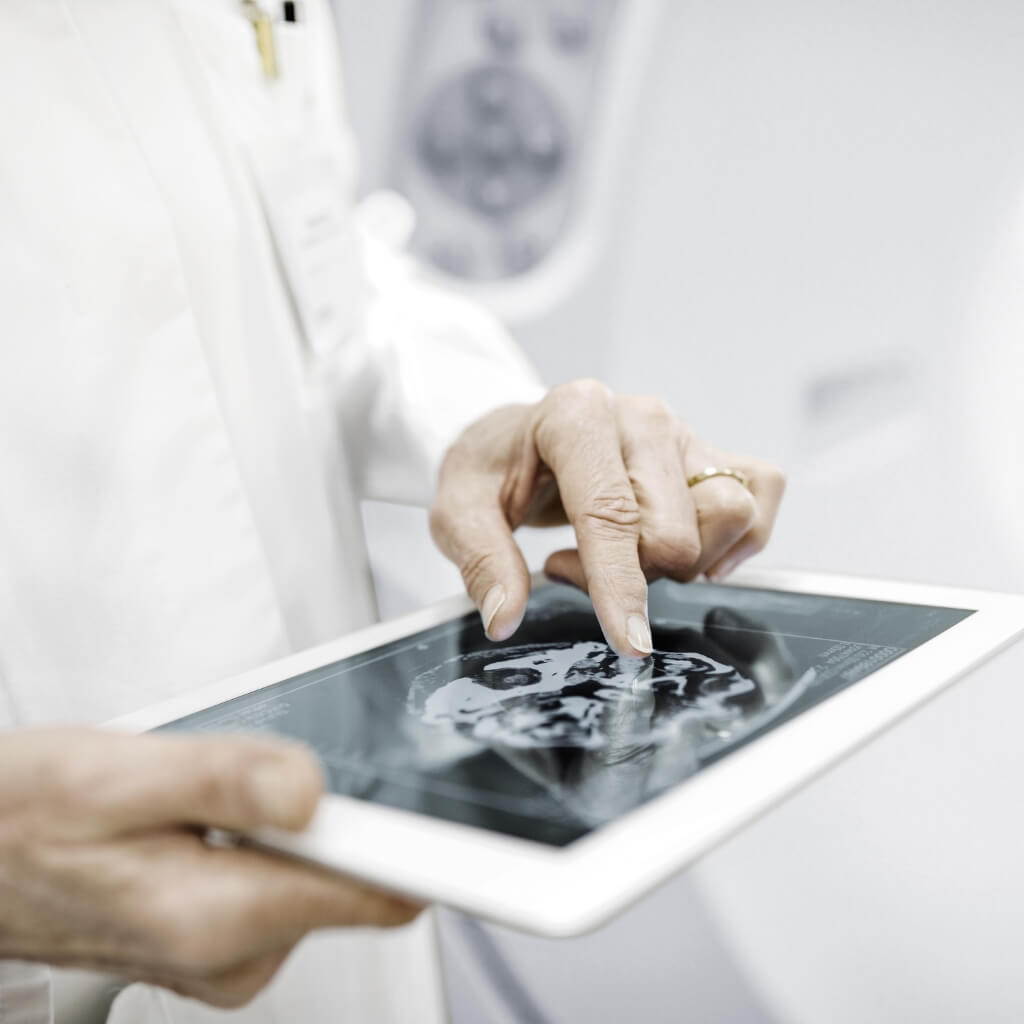
Human who looks onto a recording of brainwaves on his tablet computer and moves the model with his fingers
The Smart Infrastructure Hub Leipzig will receive a further 1,9 million euros from the cluster funding of the Saxon Ministry of Economic Affairs.
cell-immune-gene-therapies
Small glas bottle which is normally used to store vaccine
A relatively small metropolis in Germany’s Free State of Saxony – a dynamic hub for the life science industry? What was just a vision 20 years ago has become a reality for the city of Leipzig, which from October 24-26 co-hosted BIO-Europe, Europe’s largest annual biotech partnering event.